SPINR High-Performance Controllers

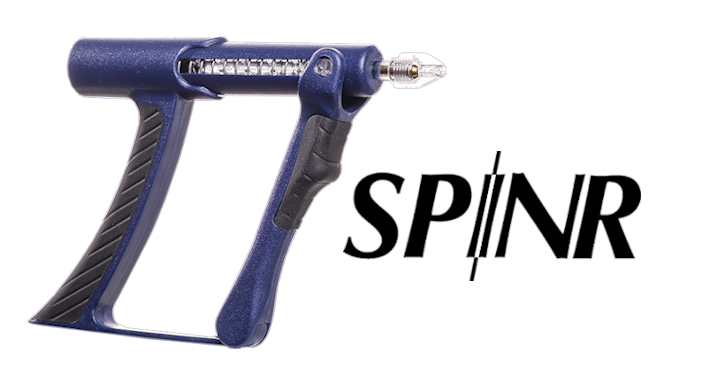
INDICATIONS FOR USE: The SPINR are used to maneuver guide wires in the coronary and peripheral vasculature. SPINRs are not intended for use in the neurovasculature. SPINR devices are “tools” not “treatments.”

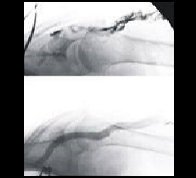
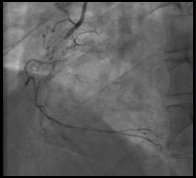
Accessing distal anatomy, navigating tortuous vessels, crossing lesions, and working through blockages with guidewires can be challenging.

These challenges vary based on the vessel type, size, location, and disease morphology. Some procedures benefit from slow clockwise and counterclockwise guidewire control, other cases need high-torque guidewire maneuvering.

Basic torque devices are easy-to-use, but they provide limited in torque, predictability, speed, control, and overall performance. Electromechanical may improve performance for certain procedures, but they are complex, expensive, and often lack tactile feel.

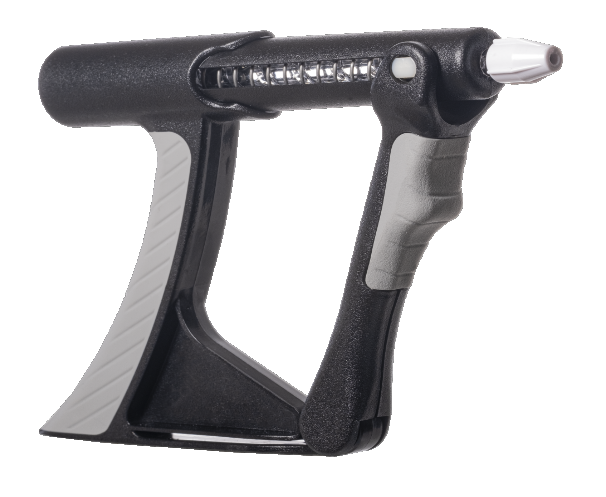
SPINR™ High-Performance Controllers deliver high-torque with predictable clockwise and counterclockwise control.

No motors, electricity, or capital equipment.

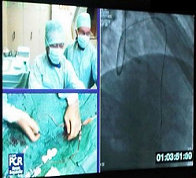
Clinicians control the SPINR’s actuation with their hand based on what they see and feel during the procedure.

Squeezing the front handle rotates the guidewire clockwise 5X, releasing the front handle rotates the guidewire counterclockwise 5X. Clinicians control rotational speed and advancement or withdraw throughout the procedure. Physicians may also use their high-torque 0.014”-0.035” guidewire of choice for the situation.

· Predictable clockwise & counterclockwise rotations
· 5X clockwise & counterclockwise rotations per squeeze
· Improved torque
· Variable speed high-performance control
· 0.014” – 0.035” guidewire compatibility
· Peripheral vasculature

PILOT ACCESS & BIOPSY ™

Bone access and percutaneous biopsy may be performed with a variety of devices, systems, and techniques including basic manual devices and electromechanical drill-like systems.

Basic manual devices are cost-effective and easy-to-use, but often lack speed, power, control, and effectiveness. Electromechanical systems may improve speed and power for certain cases, but may require costly capital equipment, service contracts, complex set-up, and expensive disposables. Some electromechanical systems reduce physician tactile “feel” for the procedure and may introduce new risks that outweigh their benefit.

The PILOT is a single-use, non-powered, hand-held, and hand-manipulated tool designed to combine the benefits of basic manual devices and electromechanically powered systems.

Clinicians squeeze and release the handle with their fingers to actuate. Improved control means physicians can perform percutaneous biopsy and/or bone access based on what they see and feel during the procedure.

INDICATIONS FOR USE: The PILOT Access & Biopsy 11ga 10cm device is a non-powered, hand-held, and hand-manipulated manual surgical instrument designed for bone access and percutaneous biopsy. PILOT devices are “tools” not “treatments.”

Distal Access - Pilot Access and Biopsy

HAPTIX ™

Distal Access - AutoPilot Access and Biopsy

Distal Access - AutoPilot Access and Biopsy

Certain bone access and bone biopsy procedures involve drilling into hard cortical bone, softer cancellous bone, and/or into intramedullary space.

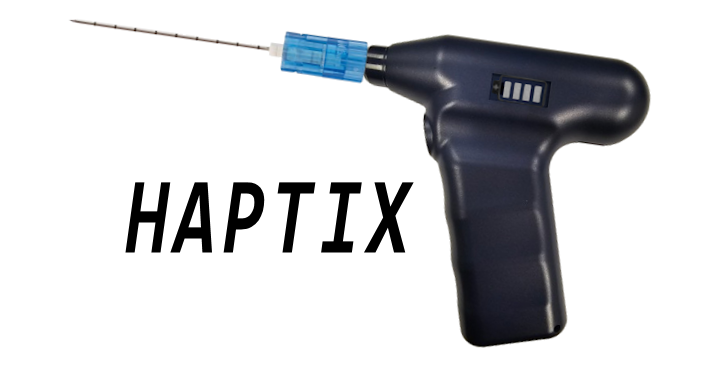
The HAPTIX is a multi-use, rechargeable, high-torque electric tool with a novel SensorTech to help clinicians feel the difference between hard bone and soft bone/intramedullary space.

SensorTech is always-on, no extra buttons to press or enable, it senses change in bone density so clinicians can make millisecond decisions based on what they sense.

Beyond sensing, the reality of multi-use rechargeable tools is that sometimes the user is handed a fully charged device, other times the battery is on its last use. Clinically, sometimes users want the full force of electric power, other times clinicians want subtle facile control when drilling in a sensitive place.

To meet these challenges, HAPTIX also feature a novel AutoRatchet that allow users drill with the electric motor or manually ratchet a needle, drill bit, k-wire, or other.
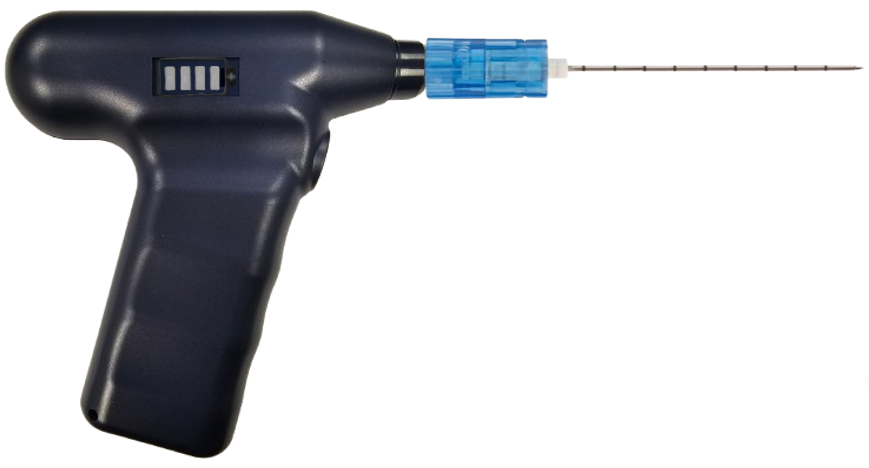
Similar to SensorTech, no switches or extra buttons to press. AutoRatchet is always available so users can make a drill with a dead battery into a manual ratchet or instantly switch between drilling and ratcheting were soft manual actuation is needed.

HAPTIX also include a battery gauge and USB-C charging to help ensure charging success with millions of existing cords-set throughout the world.

SHAVR

Tissue and/or pathology resection may be performed with a variety of surgical instruments, systems, and techniques including basic manual devices and electromechanical systems.

Basic manual devices are cost-effective and easy-to-use, but often lack speed, power, control, and effectiveness. Electromechanical systems may improve speed and power for certain cases, but require costly capital equipment, service contracts, complex set-up, and expensive disposables. Some electromechanical systems reduce physician tactile “feel” for the procedure and may introduce new risks that outweigh their benefit.

The SHAVR is a single-use, non-powered, hand-held, and hand-manipulated tool designed to combine the benefits of basic manual devices and electromechanically powered systems.

Clinicians squeeze and release the handle with their fingers to actuate cutting speed and control. Aspiration may be provided by wall suction and/or an aspiration pump. Improved control means physicians can perform surgical resection based on what they see and feel during the procedure.

INDICATIONS FOR USE: The Shavr is a non-powered, hand-held, and hand-manipulated manual surgical instrument for tissue resection. Shavr devices are “tools” not “treatments.”

Distal Access - SHAVR

ABOUT DISTAL ACCESS

  • png-spnr-cut
  • png-pilot-cut
  • png-shavr-cut

DISTAL ACCESS

Distal Access designs and develops medical devices to improve patient care including:

Medical Device Controllers

Tissue Resectors, Macerators & Cleaners

Access & Biopsy Devices

Medical devices can help clinicians improve patient care. New technology is often developed with expensive complex electromechanical drive systems that increase speed & power, but often are cost-prohibited and result in less physician tactile feel for the procedure.

Distal Access’s platform is designed to improve performance and maintain physician feel and control for procedure with cost-effective devices. The SPINR driver is a core innovation at Distal Access that allow clinicians to increase torque, speed, power, and/or control with the power of the clinician’s hand.

WATCH IT IN ACTION

SPINR

Distal Access - SPINR

PILOT Access & Biopsy ™

Distal Access - Pilot Access and Biopsy

SHAVR

Distal Access - SHAVR

Unmet Need - Distal Access Medical Devices

Unmet Need - Distal Access Medical Devices

Unmet Need - Distal Access Medical Devices

Unmet Need - Distal Access Medical Devices